
Gate Valve Actuation System
Prioritized Topics before Meeting with Facilities.
Compressed Airline:
- What kind of material should the piping be made of to minimize maintenance situations? Routing of the piping throughout the laboratory.(Rigid Attachments and Safety Precautions)
- Could we install a valve on the wall side ? This is in case we every need to operate or maintenance the Air Compressor.
- Preference is to get any work inside to be done first to minimize dust and debris from outdoors entering the lab. (Installation of the Copmpressed air line routing to the vacuum system, single cylinder rack )
Air Compressor Location:
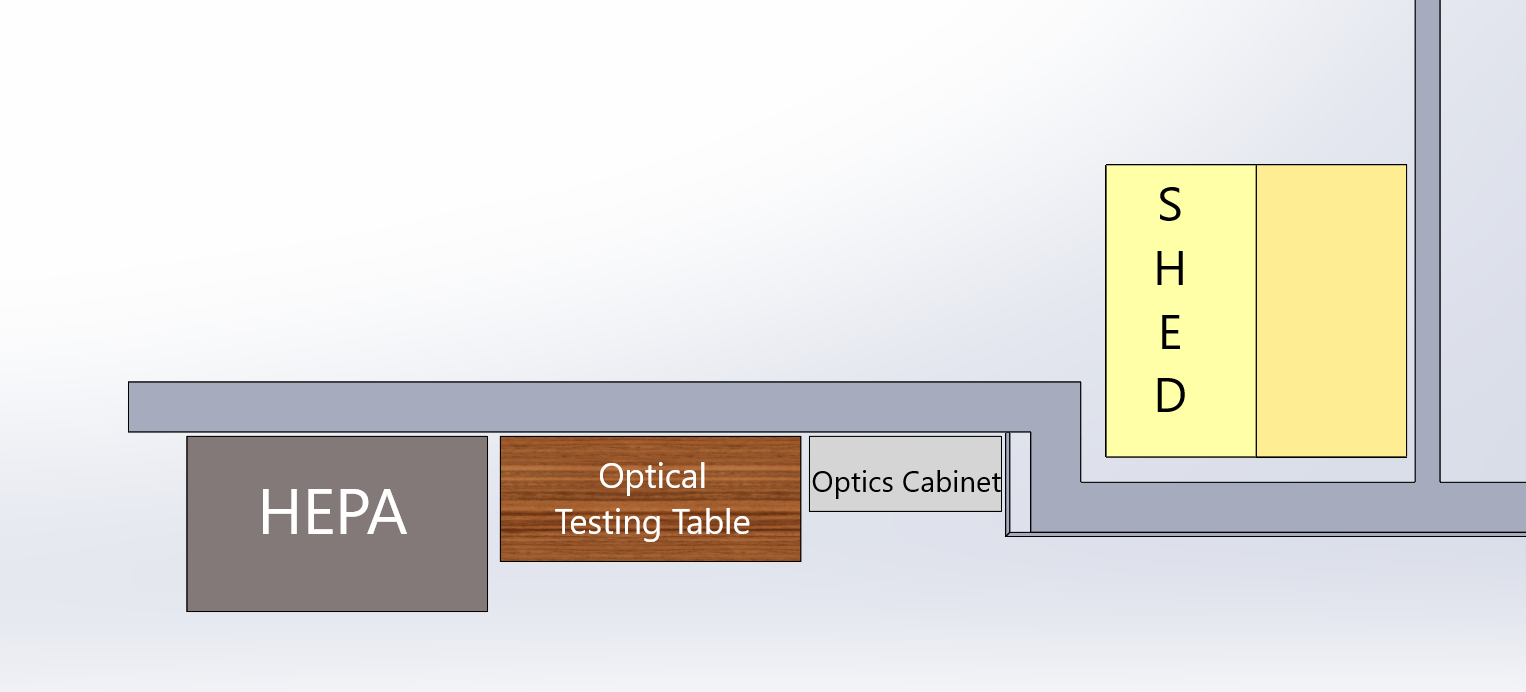
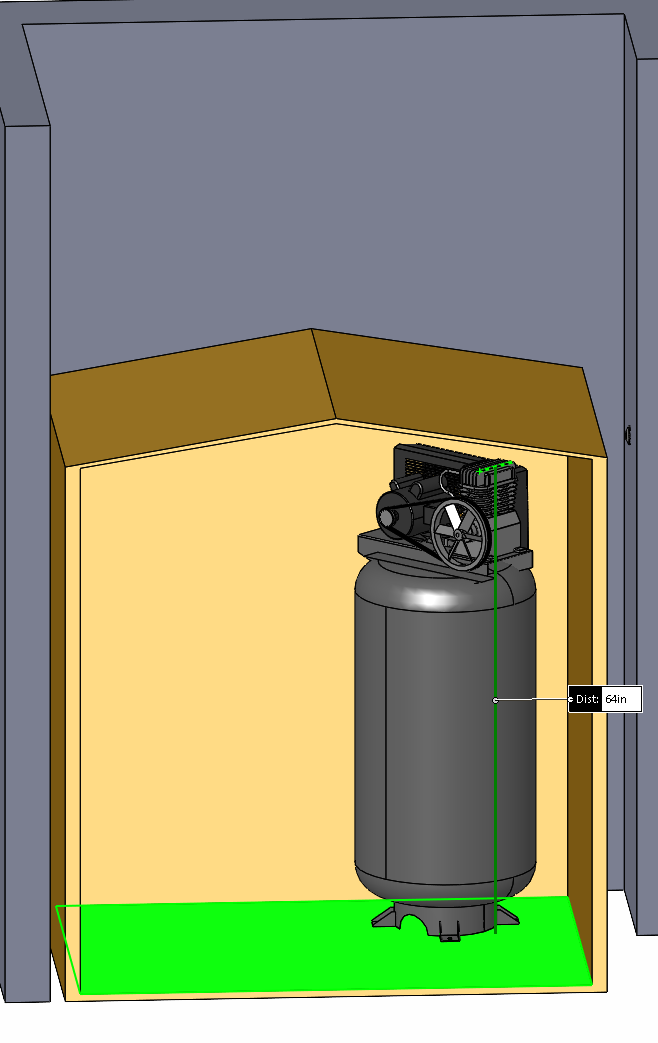
- The location of the Air compressor is to be placed inside of the shed. This is to protect against strong sunlight and changes in weather.
- Is the routing of the Compressed air line Rigid enough?Is there a better routing we can do?
- Air Compressor requires 220V. How and where can we install such an outlet nearby?
Downtime:
- How soon can this project begin ?
- How long is this do you expect this project to take? a 2-3 Days ? Preferred work schedule to begin from Wednesday onward.
Costs:
Charges for this project are not applicable directly to experimental work being observed. Rather, this is a project the will better suit us in maintaining the status of our experimental site. Should this be charged on the LIGO Operations PTA? LIGO.CY24-28CIT/LOPS.FAC.LBSH.57.CIT/NSFLIGO.2309200 (P2920883)
- We will need a quote for labor and material from the Caltech Facilities.
Approach:
- Before the project begins, we would like to get a planned out approach regarding which steps should be taken first. For Example:
- Compressed air line routing distances must be measured and sketched.
- Gather Materials, components, and parts for the project.
- Begin with project inside the laboratory
- . . .
- . . .
- . . .
- Install, Connect and run the Air Compressor.
- Leak check the system to double check airtight fittings.
Proposal for Transitioning from Nitrogen Bottles to an Air Compressor System for Pneumatic Valve Operation
Current Situation
The vacuum system in the 40m laboratory currently utilizes pneumatic valves to operate. These valves require a continuous supply of air pressure to function properly. If the air pressure is depleted, the vacuum interlocks engage, automatically closing all the valves, which results in a system shutdown and an increase in pressure.
Currently, the system relies on NI300 Industrial Nitrogen cylinders from Airgas as the air supply. Each cylinder lasts approximately three days, leading to an annual cost of roughly $1,770, or $15,000 since the setup’s inception before 2009. This cost does not account for the experimental data measured within the vacuum system. The original rationale for using nitrogen was to avoid degradation of the Viton seals in the pneumatic valves, as nitrogen is a dry source of air. However, the ongoing costs of this system have become unsustainable in terms of both time and finances.
In addition, there have been instances where nitrogen cylinders were not manually swapped in time, leading to unexpected vacuum system shutdowns. These issues are especially problematic during extended periods when lab personnel are not present, such as during winter break, spring break, summer vacation, and other holidays.
Proposal
To address the ongoing costs and operational issues, we propose the installation of an air compressor system to replace the current nitrogen bottle setup for supplying pneumatic valves. This system will include a 60-gallon ballast tank and an integrated drying system to ensure the air remains dry and protect the Viton seals from degradation, maintaining the long-term reliability of the pneumatic valves.
The proposed system will operate as follows:
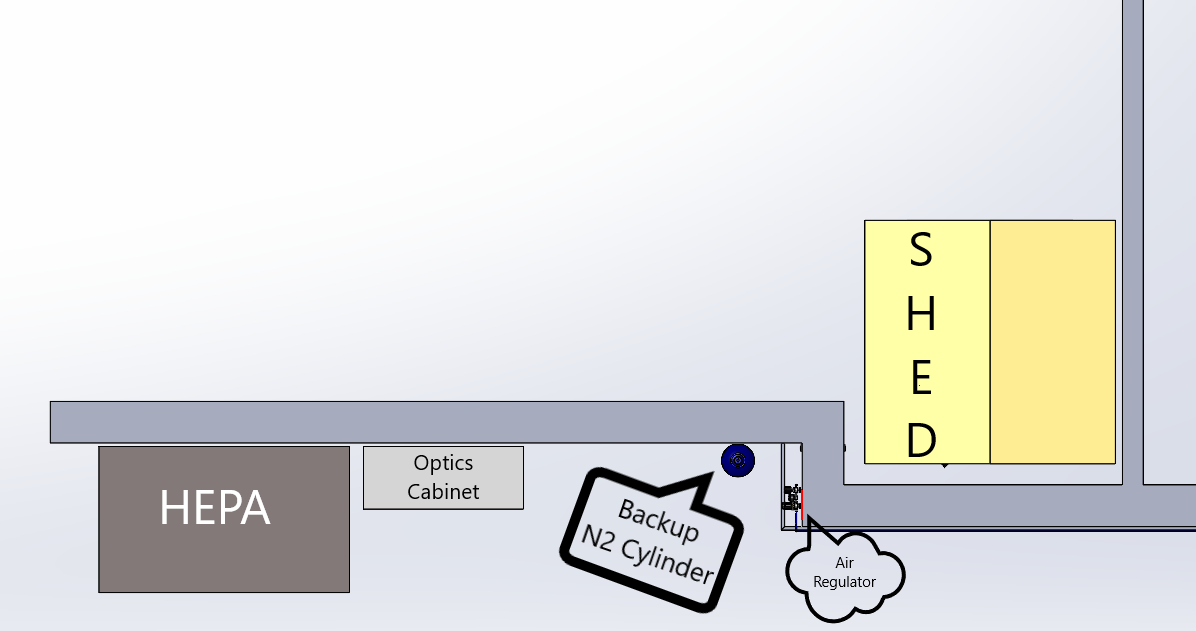
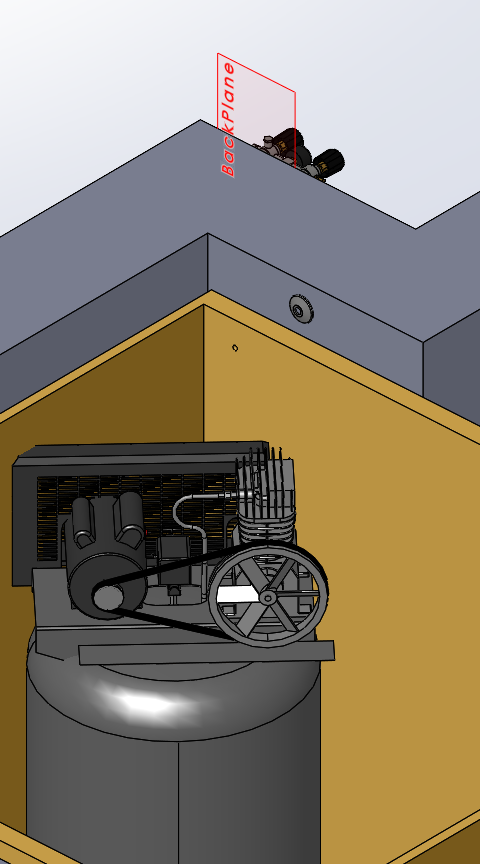
- The air compressor will be installed inside the shed storage area within the 40m cage area. It will be placed on rubber isolating pads to minimize seismic vibrations. A pipeline will be drilled through the West Wall of the X End, connecting the air compressor to a fitting on the interior of the lab. This will allow the air supply to be routed from the compressor to the pneumatic valves. The air compressor will have an automatic pressure switch, activating the system when the pressure falls below 90 PSI. The 60-gallon ballast will store air at a maximum pressure of 120 PSI. The pneumatic valves require 80 PSI to maintain operational status, so this configuration will meet the necessary requirements. The system will be equipped with an air regulator and a swap-over manifold that will manage the air supply. One side of the manifold will connect to the air compressor, while the other will be linked to a backup nitrogen cylinder. This will ensure a fail-safe in the event of a power outage or air compressor failure. The regulator will ensure that a consistent pressure of 80 PSI is maintained across all pneumatic valves.
This new setup will allow for more reliable operation of the vacuum system, eliminating the need for manual nitrogen cylinder changes and reducing operational disruptions during extended absences. Furthermore, the transition from nitrogen to compressed air will yield significant cost savings. The cost of maintaining the air compressor system, including electricity and routine maintenance, will be far lower than the ongoing nitrogen cylinder costs.
Conclusion: Switching from nitrogen to a compressed air system will provide significant financial and operational benefits. The air compressor will ensure continuous operation without the need for manual intervention, reduce the risk of system shutdowns, and offer a more cost-effective long-term solution. We recommend the immediate installation of this system to replace the existing nitrogen-based air supply for pneumatic valves.
Nitrogen Cylinders
The Nitrogen Cylinders are used to maintain the Open Status of the Pneumatic Valves. Without a pressure of 80 PSI in these lines, the pneumatic valves will close and the interlocks will trip. No valve can be opened until these interlocks have been switched off.
Gas |
' System Usage ' |
Cylinders Ordered |
Monthly Cost |
Yearly Cost |
NI NI300 Industrial Grade Nitrogen |
Pneumatic Valves for Vac System |
|
~$147.00 |
$1761.24 |
NI RP300 Research Grade Nitrogen |
Top Gun |
1 |
$252.58 |
$252.58 |
Costs for the Project
Component |
Desctription |
Cost |
Estimated Date of Arrival |
Link |
60 Gal. Stationary Ultra Quiet, Oil-Free 4.0 HP Electric Air Compressor with Air Drying System and Automatic Drain Valve |
Air compressor that will replace the current Nitrogen bottles. Main Component of this project. |
$3,530.10 |
|
|
Aluminum Tubing |
This is the Aluminum tubing that will control and direct the flow of the compressed air. Piping will partially be outside, so we need non-corrosive tubing. |
$55.51 per 50 ft |
In Stock, purchase upon approval |
|
SS Compression fittings |
Compression Fitting for connecting aluminum piping to the other components of the system. |
In Stock, purchase upon approval |
|
|
Vibration Isolation |
Rubber feet to minimize the seismic vibrations of the compressor. |
In Stock, purchase upon approval |
|
|
Labor |
Will update after meeting with facilities. Please See Notes at the bottom. |
3/3/2025 |
N/A |
|
Required Work from Facilities
Air compressor Preparation
- Vibration Isolation Pads. How will we bolt the air compressor down? Will we have to use unistrut anchored down, the have the compressor sit on the unistrut with the damping pads sandwiched in between?
- 220V Power Supply - We need a 220V power outlet nearby that is safe for the outdoors. How will this be implemented? where is the best location ?
- Outdoor to Indoor Piping - What type of piping is best for outdoors? How will the inlet be sealed to prevent insects from entering through here?
- Expected Downtime - How long will this job take ? How soon can this job be done ?
Compressed Air Line Routing
- All Compressed Air Lines will all be connected to the switch over manifold. This manifold is combination of an automatic switchover mechanism and a pressure regulator.
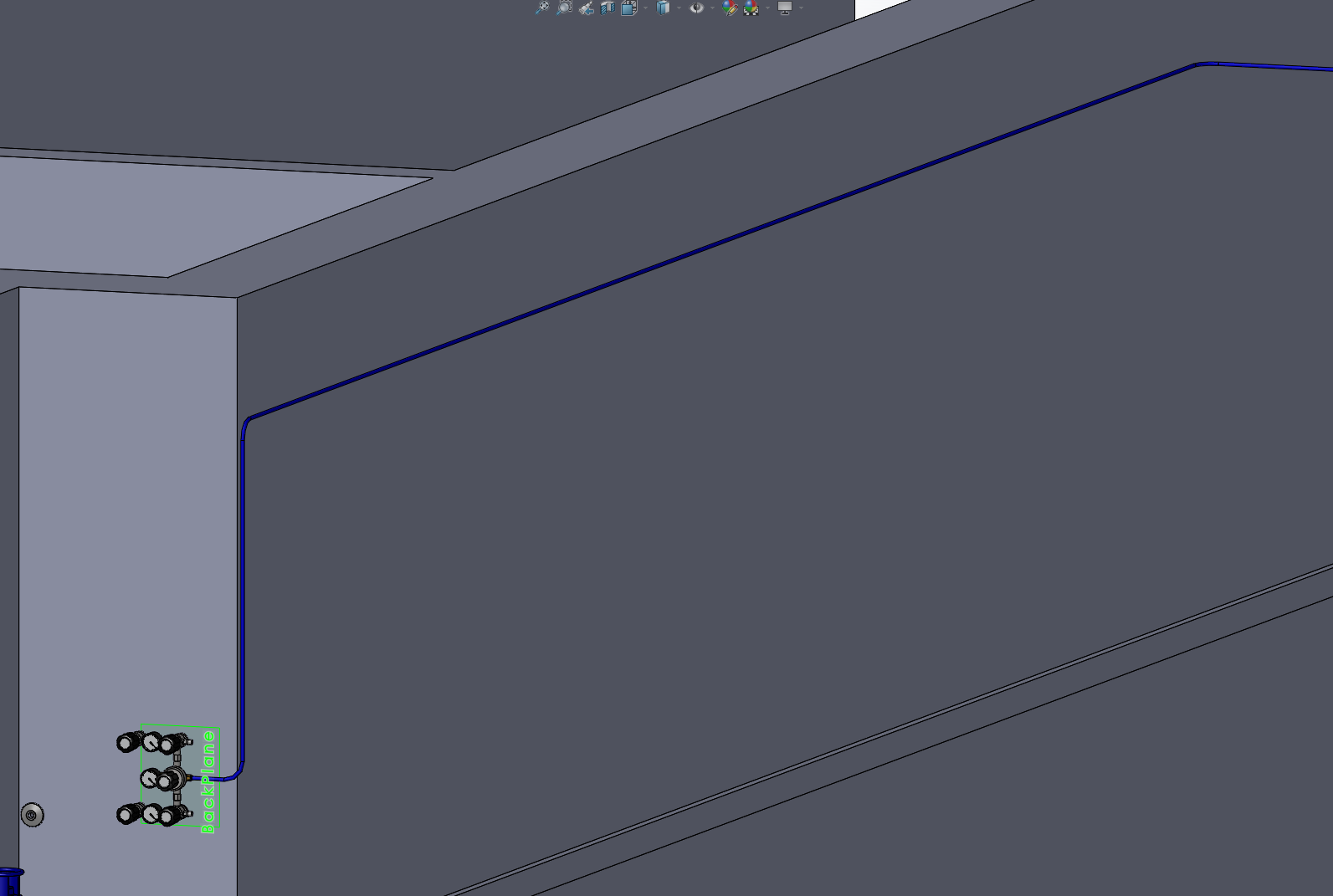
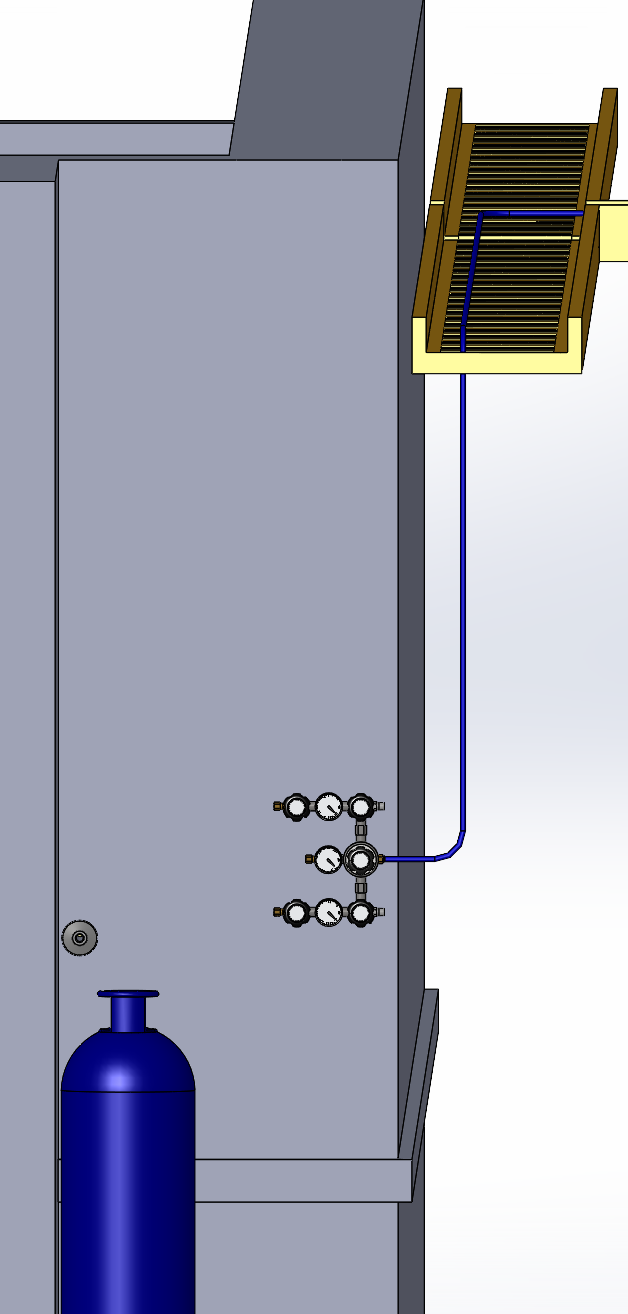
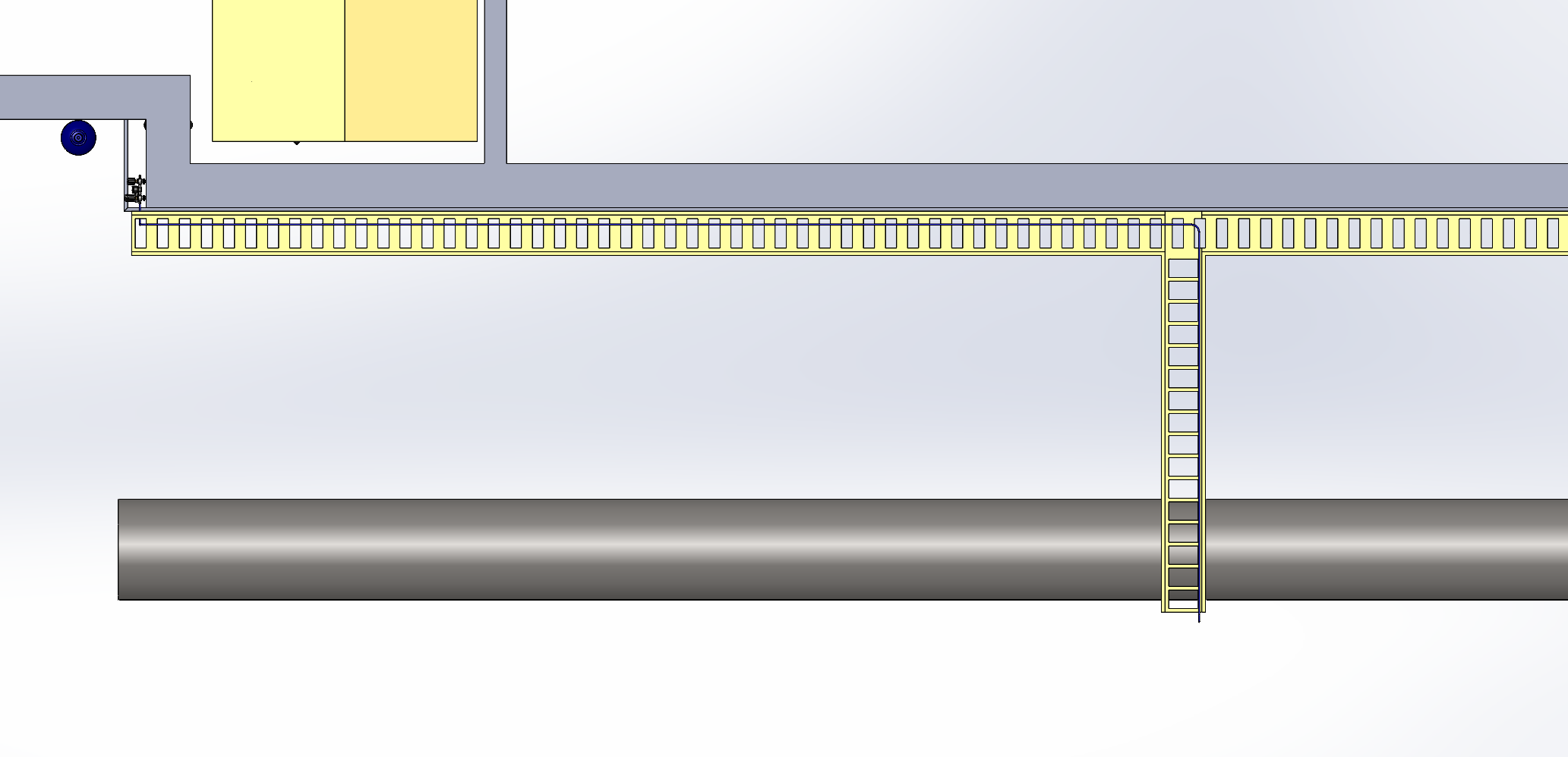
- Braces attached to the wall - Preference is to attach and run the compressed air line along the side of the west wall of the X arm. From here, it will branch over and run along the cable rack which extend over the X-Arm Tube. (Shown in the Top View Attachment Above).
- What size piping is best ? If we go too thin, the tube is at risk of being easily damaged. 1/4" Diameter may be rigid enough, but I am not sure.
- Expected Downtime - How long will this job take ? How soon can this job be done ?
Drawings
Here is a downloadable EASM File so you could view/rotate/move the part freely: CompressorRouting.zip

- uptime
- part numbers
- requirements
- price / quotes
- required facility work
- plan of work in the 40m lab
- required downtime